• Concrete Slab to Garden

    The LA Times has run a wonderful feature story about our transformation of concrete slabs into gardens.  More photos can be found in our portfolio (see the “Roseview” garden), showing the garden with its spring and summer flowers.

    Here are links to the article and associated items…

    Green transformation of gray patios — latimes.com

    Photo Gallery

    How-to Sidebar

  • Susan Carpenter, LA Times’ Realist Idealist, has been working with us to redesign her backyard.   It’s been a great opportunity to combine sustainable design principles with urban farming and to explore how locally native California plants can fit into the edible landscape.

    Her small backyard presents a few special challenges, the biggest literally being a mature ficus tree in the center.  While it holds a darling tree house, it also shades much of the back yard.  Figs can be big bullies – their roots notoriously consume concrete foundations and they aren’t friendly companion plants.  And the shade, while wonderful, limits the types of fruit trees and other edibles.

    Sue also wants to harvest all of her rainwater.  In a previous article, she discussed waterwalls and other means of active catchment, and she now has a large waterwall next to her garage.  But this only holds the garage runoff.  Her next installment will discuss how we are dealing with the thousands of gallons that the house’s roof can harvest in a single 1″ rain event.  Stay tuned for that!

    The plant palette we’ve chosen for the back yard now includes locally native edibles (the new berm will be covered with different fruiting native currants)  and shade tolerant native vines (honeysuckle, dutchman’s pipe, clematis) will adorn fences, the treehouse, and the waterwall.  Covering the ground, between urbanite paths, her existing deck, and a new gravel patio, will be a new kind of “lawn.”  We will be seeding the ground with a mixture of native wildflowers, grasses and sedges which should thrive in the shade and provide a lush, walkable meadow.  One that needs no mowing and no fertilizing, and just an occasional drink of water.

    This backyard will provide berries, flowers, and more traditional fruit (Sue has already planted a small grove of plums in the back, and we’re adding a large grape-covered arbor to shade the deck).  And all the plants feed someone – if not Sue then the butterflies, bees, birds, and other pollinators.  It’s wholesome food, too.  By selecting locally native plants she’ll be giving them the nectar and berries they’ve evolved with, over thousands of years, and it’s when and where they need it.  It’s nectar that’s missing from the exotic plants that we’ve been filling our gardens with, and it tastes like home.

  • This month, Garden Design asked their contributors “What’s the best green idea you’ve discovered in a garden this year?”  Contributor Debra Prinzing replied:

    Southern California is a sea of backyard concrete, which is anything but sustainable. So I’m impressed with the way L.A. garden designer Stephanie Bartron, APLD, of SB Garden Design makes her clients’ concrete patios both permeable and artful.  She redesigns dated patios by cutting out sections of concrete as decorative bands, grids and other patterns.

    We’re honored!

    The Roseview garden is one of our favorite examples.  And, to be fair, we were inspired by the brilliant Jay Griffith and Rob Steiner, who’ve been cutting up old patios all over this city for some time.

  • Stephanie has completed the G3LA sustainable design program and is now a G3 Certified Landscape Professional.  This program included training on water harvesting (both active and passive), low-water irrigation systems, organic gardening and soil amendment, lawn alternatives, water use and budgeting calculation, and much more.

    We are excited to be part of the sustainable movement in landscape design, and looking forward to LA’s transformation into a truly green city; verdant, bountiful and beautiful.

  • salad-to-goblog6

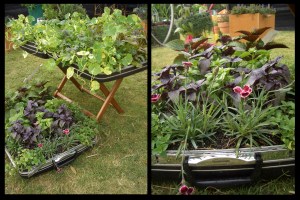
    Our entry in the recent LA Garden Show, as part of the APLD group booth.

    Filled with herbs, salad greens and edible flowers, these vintage Samsonite suitcases were recycled as portable salad gardens.  Add a luggage stand, and they are perfect for apartment dwellers with a sunny window or small patio.

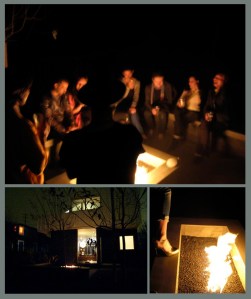
  • grunbaumblog3Just got these pictures from a happy client. He celebrated the New Year with friends at his fab new pad, designed by Barbara Bestor. This Venice home is designed to evoke “floating clouds” and we played along with cantilevered details in the entry path and patio. In springtime the house will be fronted by a cloud of white flowering trees, too.

    In the meantime, these photos reminded me that I haven’t blogged about firepits. I think they are the best “bonus” feature you can add to a garden. Especially in LA, where we often end up outside at parties, even when it’s 50 degrees in December. Plus, nothing makes an evening more magical and relaxing than watching flickering flames dance around.

    Add low-voltage lighting, outdoor speakers, and maybe an outdoor TV/Projector, and your garden is ready for nighttime fun.

    This home+garden was also featured in the LA Times, here – Barbara Bestor’s ‘floating bungalow’

  • Playground Design

    As a mother and a garden designer, I am really interested in the way that children use outdoor spaces. Often, given everyone’s busy schedules, it is the children who spend the most time in the gardens. As they grow, their needs change, too.

    After addressing safety concerns, the two things parents most often request are a play lawn and a climbing toy/structure. Older kids love trampolines, and parents with teens often want swimming pools. Creative design can create space for dynamic play and be adult-friendly, too.

    We like to include natural elements and work with existing hillsides, when possible. We use plants to stimulate all of their senses, and provide opportunities for creative play and exploration. This can be as simple as a small plot where they can plant vegetables and flowers, or as complicated as a maze. The most popular elements from the play toy can be “exploded” into the landscape (like slides and stairs from the board game “Chutes & Ladders”). An outdoor wall, or fence, can be painted with chalkboard paint.

    GOOD magazine has a whole section of great articles about this topic: Fall Down Go Boom, Nature Playgrounds, Loose Parts Playgrounds, and Adventure Playgrounds

  • (Click on the photo above to enlarge)

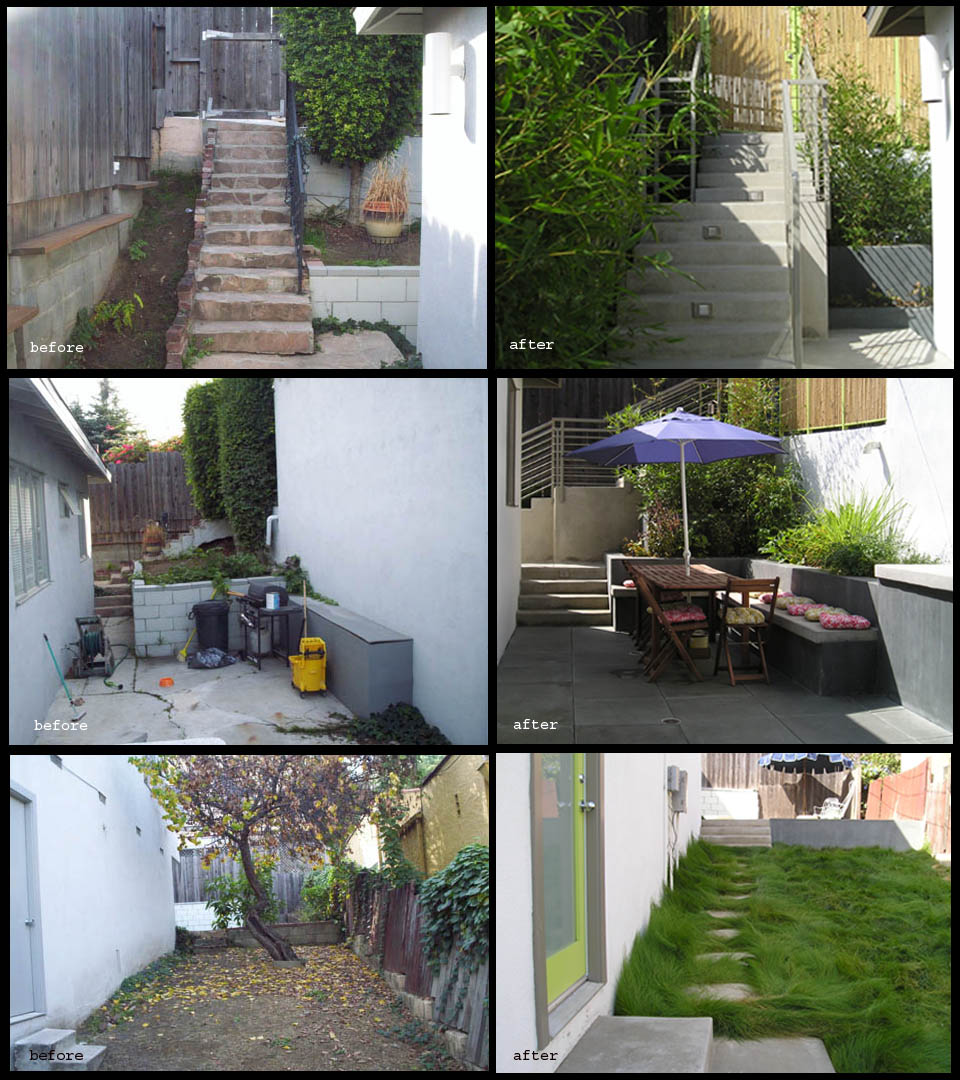
    Another dramatic transformation. New stairs created a safer, more welcoming entry, a small patio is now a comfortable outdoor dining room, and an unused side yard has a path and a meadow play-yard..

    More photos of this lovely home and garden were profiled by Apartment Therapy, and the house has its own blog…


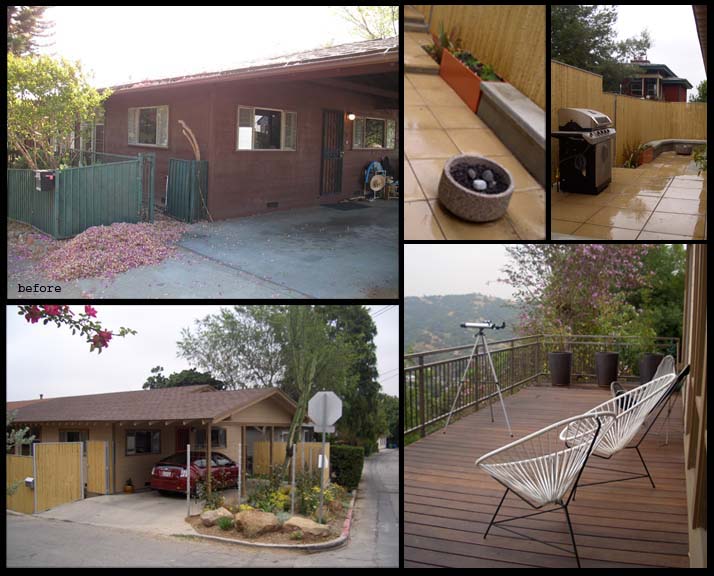
  • Building around the large euphorbia already in the front yard, we replaced the old metal fence with a new bamboo one. We planted a mix of colorful,  low-water succulents, grasses and perennials.  The side yard is now a series of outdoor living rooms, with built-in seating, a firepit, and herb planters.  A tiny front yard went from dirt pile to small lawn, and the back deck is now sturdy and elegant.

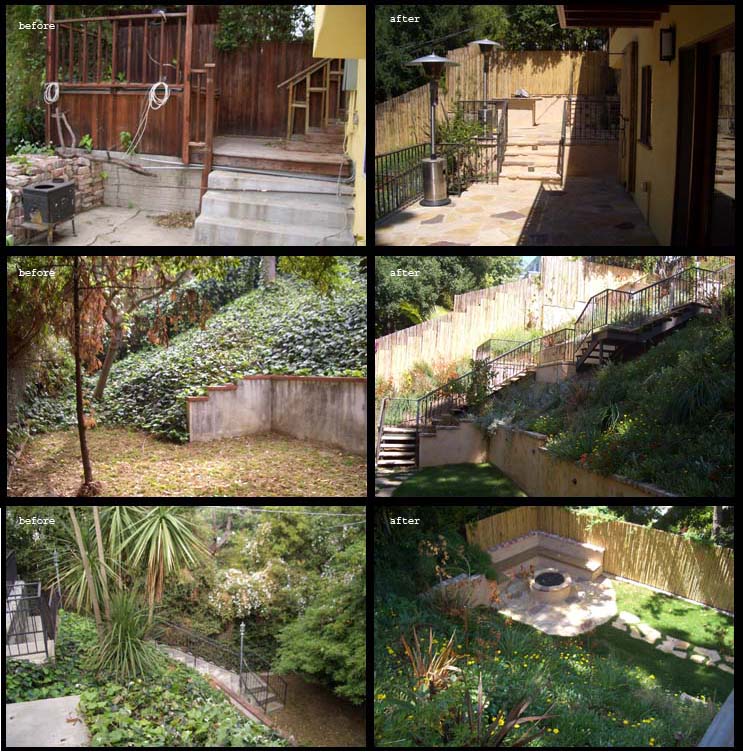
  • Another hillside transformation! A new outdoor kitchen and colorful flagstone completed the upper patio. We added new stairs to provide access to the lower yard. And the ivy covered hillside was re-planted with ecclectic, colorful, low water California friendly plants.